It's one of the more frustrating things about tile floors. You mop every week, sometimes more, and the grout still looks dull and grey, or darkens in patches no matter how often you go over it. It's easy to assume you're using the wrong product or not scrubbing hard enough. In most cases, the real reason has nothing to do with effort. It comes down to what grout actually is.
Grout Is Porous, Not Sealed
Unlike the tile itself, grout is a porous material. It has tiny gaps that soak up whatever sits on it, including dirt, grease, and the water used to clean it. A mop wipes the surface clean for a moment, but it can't reach what has already worked its way below that surface. Over time, soil builds up inside the grout itself rather than on top of it, which is why it keeps coming back no matter how often you mop.
Mopping Can Actually Push Grime Deeper
This is the part most people don't expect. Mop water isn't clean water, it's already carrying dirt picked up from the rest of the floor. When that water passes over grout lines, some of it gets pressed into the pores rather than lifted away. As it dries, the trapped soil stays behind, and the next mop pass adds a little more. Regular mopping keeps the tile looking fine while slowly making the grout darker underneath.
Why It Shows Up Worse in Kitchens and Bathrooms
Grease in a kitchen and soap scum in a bathroom bind to porous grout differently than everyday dust does, and both areas tend to stay damp for longer after cleaning. That extra moisture gives grime more time to settle in before it dries, which is why grout in these rooms often darkens faster than grout in a hallway or living area.
Why Bleach and Vinegar Only Help Temporarily
Bleach can lighten grout for a week or two, but it works on the surface layer only and doesn't remove what's trapped deeper in the pores, so the same discolouration returns. Used too often, it can also wear down any existing sealant and leave patchy, uneven colour across the floor. Vinegar has a similar surface level effect, and on some natural stone tiles it can cause damage the tile itself never fully recovers from.
What Professional Tile and Grout Cleaning Does Differently
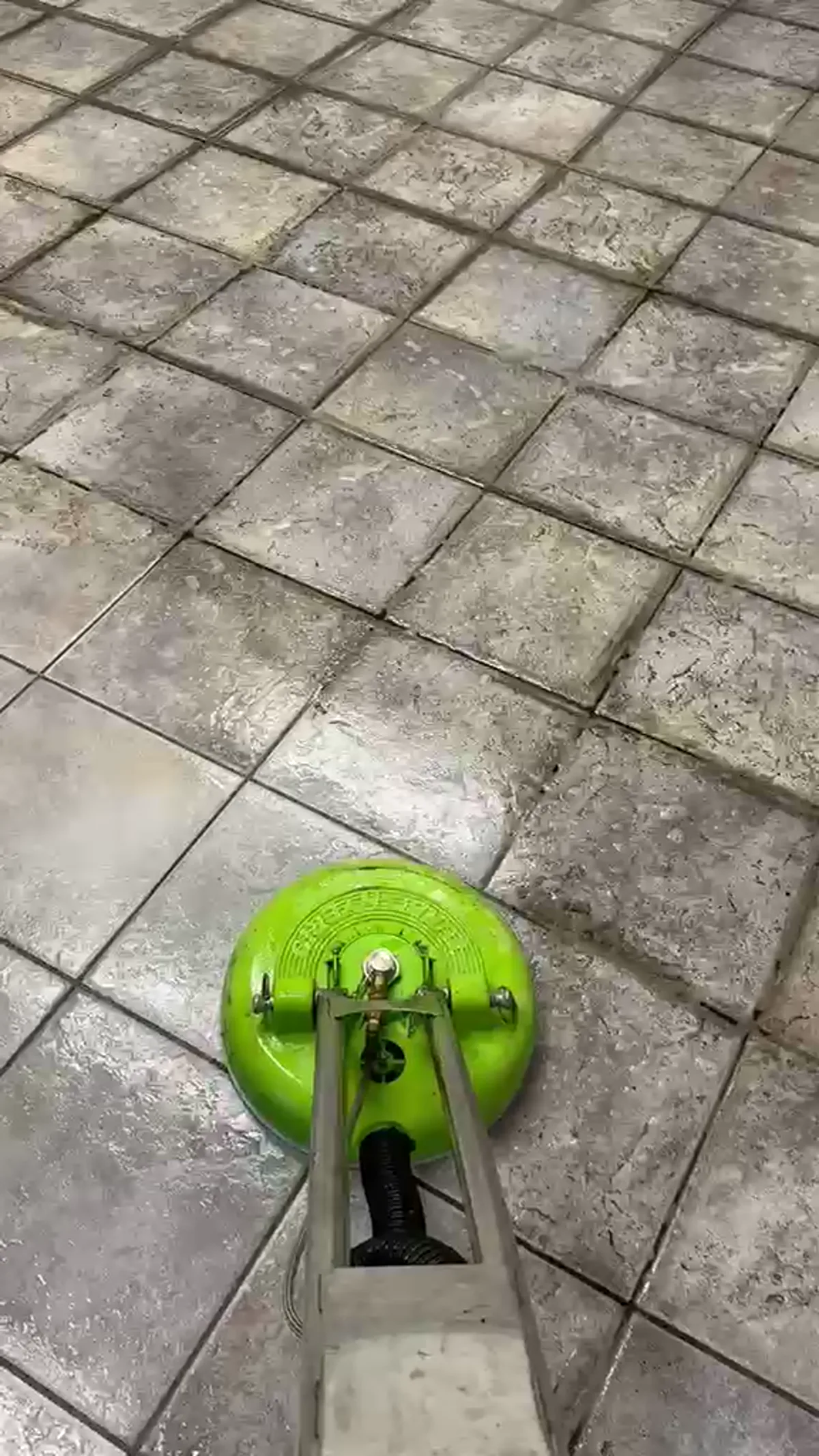
Professional tile and grout cleaning uses hot water extraction combined with mechanical agitation, working the grout lines to loosen soil that has settled deep in the pores, then extracting it out along with the water rather than leaving it to dry back in. That's the step a mop was never built to do. Sealing the grout afterward closes the pores back up, which slows down how quickly new soil can work its way in and keeps the floor easier to maintain between cleans.
The same approach applies to bathrooms with heavy soap scum and kitchens with built up grease, both respond to heat and proper extraction in a way surface cleaning products can't match. For households that prefer to avoid harsh chemicals around kitchens and bathrooms, we use eco-friendly cleaning products that still lift ground in grime without leaving strong residue behind.